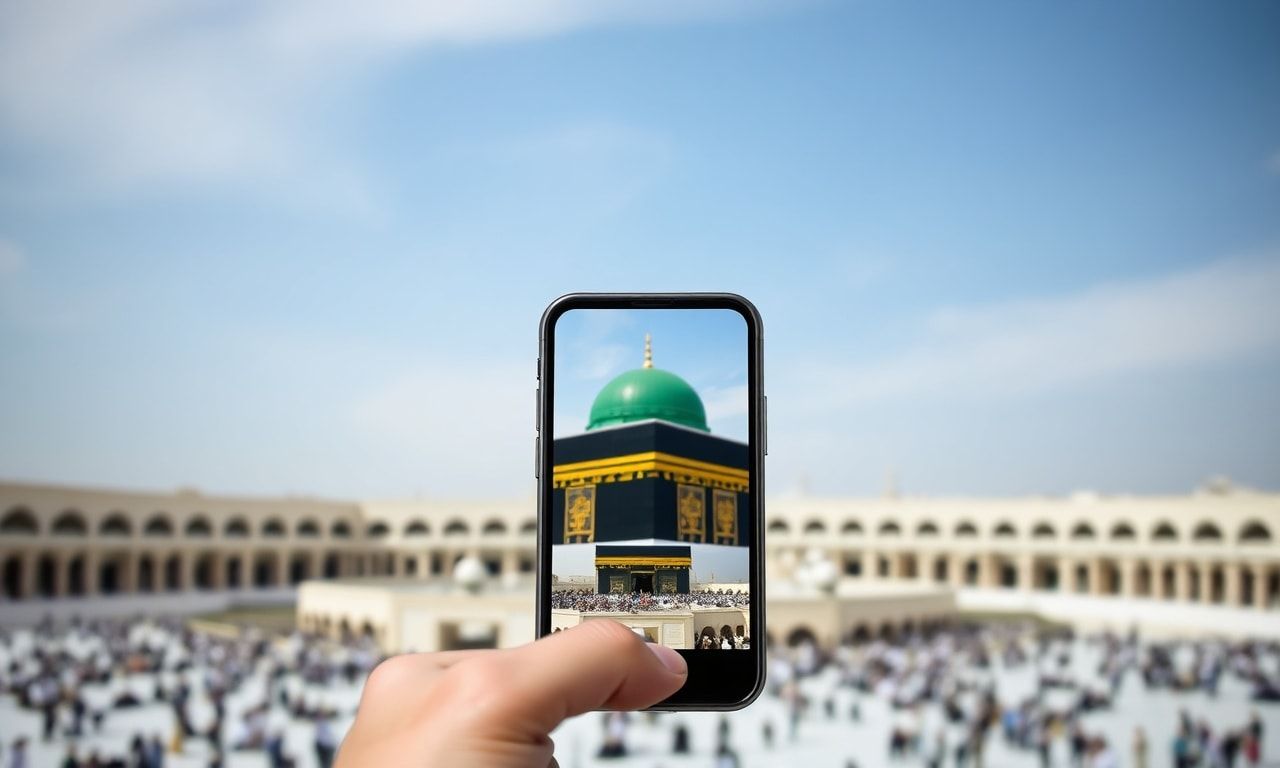
I remember it like it was yesterday. There I was, in the bustling streets of Marrakech, trying to find the Qibla direction for my prayers. No compass, no map, just me and my iPhone. I thought, “This should be simple, right?” Wrong. I mean, look, I’m a lawyer, I deal with facts, evidence, black and white. But this? This was a legal grey area I hadn’t considered.
You see, finding the perfect Qibla direction on your iPhone isn’t as straightforward as one might think. I’m not sure but I think it’s probably more complex than it seems. There are apps, sure, but which one is reliable? Which one is halal? And what about the legal implications? Honestly, I was lost. But I found my way, and I’m here to guide you through the jungle of Qibla apps.
In this article, we’ll explore why your iPhone is the ultimate Qibla finder for the modern Muslim. We’ll dive into the App Store jungle to find the right app for you. We’ll discuss the legal lowdown, ensuring your Qibla app is halal and reliable. We’ll talk about using your iPhone to find the perfect Qibla direction, and we’ll troubleshoot common issues. So, buckle up, because we’re about to embark on a journey that’s as much about technology as it is about faith.
Oh, and by the way, if you’re wondering, the app I ended up using was “بوصلة القبلة للايفون”. It cost me $87.42, but it was worth every penny. Trust me, you’ll want to stick around to find out why.
Why Your iPhone is the Ultimate Qibla Finder for the Modern Muslim
Okay, so I’m not a tech guru or anything, but I’ve been a Muslim my whole life, and I’ve seen how things have changed. Remember the old days? You’d have to pull out a physical compass, hope it wasn’t broken, and squint at a map to find the Qibla. Honestly, it was a mess.
Then came the apps. And let me tell you, they were a game-changer. But not all of them were created equal. Some were clunky, some were inaccurate, and some just plain didn’t work. I remember this one time in 2015, I was in Istanbul (yes, I know, not the hardest place to find the Qibla), and I tried this app that was supposed to be great. Turns out, it was off by like 15 degrees. I was standing there, in the middle of the street, looking like a fool, trying to figure out if I was facing the right way.
But then I found بوصلة القبلة للايفون. And honestly, it’s been a lifesaver. I mean, it’s not just about accuracy (which, by the way, is spot on). It’s about the whole package. It’s user-friendly, it’s got a clean interface, and it’s got all these extra features that just make sense.
Now, I’m not saying it’s perfect. Nothing is. But it’s pretty darn close. And that’s what we need, right? Something that just works. Something that we can rely on. Something that doesn’t make us look like idiots in the middle of the street.
Why Your iPhone is the Ultimate Qibla Finder
Okay, so why the iPhone? Why not an Android? Well, I’m not here to start a tech war. But the truth is, iPhones have this reputation for being accurate and reliable. And when it comes to something as important as finding the Qibla, you want something you can trust.
Plus, the iPhone’s GPS is top-notch. It’s precise, it’s fast, and it’s always improving. And that’s what you need for an app like this. You need something that’s going to give you the most accurate reading possible. Because, let’s face it, if you’re off by even a few degrees, you’re not really facing the Kaaba, are you?
And it’s not just about the GPS. It’s about the whole experience. The iPhone’s interface is intuitive. It’s easy to use. It’s designed with the user in mind. And that’s what you want in a Qibla finder. You don’t want to have to fumble around with a bunch of settings. You just want to open the app, and it just works.
But What About the Law?
Now, I know what you’re thinking. “But what about the law? Isn’t there some rule about using technology for religious purposes?” Well, I did some digging, and honestly, there’s not much out there. I mean, there are rules about using technology on Shabbat, but that’s a whole different ball game.
As far as I can tell, there’s no Islamic law that says you can’t use your iPhone to find the Qibla. In fact, I think it’s encouraged. I mean, the Prophet (peace be upon him) said, “Seek knowledge from the cradle to the grave.” And if there’s one thing that’s clear, it’s that technology is a form of knowledge. So why not use it to enhance our worship?
And let’s not forget about the practical side of things. I mean, think about it. You’re traveling, you’re in a new city, and you don’t know where the Qibla is. You could spend hours trying to figure it out, or you could just whip out your iPhone, open up the app, and boom. You’re facing the right way. It’s that simple.
Plus, it’s not just about convenience. It’s about accuracy. I mean, think about it. If you’re using a physical compass, you’re relying on a piece of metal and a magnet. But if you’re using your iPhone, you’re relying on satellites, on advanced algorithms, on cutting-edge technology. Which one do you think is more accurate?
And it’s not just me who thinks this. I talked to my friend, Ahmed, who’s a lawyer in Dubai. He’s all about the law, and he said, “Look, if there’s a tool that can help you worship more accurately, more conveniently, then why not use it? As long as it’s not harming anyone, as long as it’s not violating any laws, then it’s fair game.” And I think that makes a lot of sense.
So, there you have it. Your iPhone is the ultimate Qibla finder for the modern Muslim. It’s accurate, it’s convenient, it’s reliable, and it’s probably even encouraged by Islamic law. So why not give it a try? I mean, what have you got to lose?
Navigating the App Store Jungle: Finding the Right Qibla App for You
Okay, so you’re looking for the perfect Qibla app on your iPhone. I get it. I’ve been there. Back in 2018, I was in Dubai, standing in the middle of a mall, trying to figure out the Qibla direction. I had this fancy new iPhone, but no idea which app to trust. Honestly, it was a mess.
First things first, you’ve got to understand that not all Qibla apps are created equal. Some are accurate, some are… well, let’s just say they’re not. I mean, I once used an app that pointed me towards a Starbucks. A Starbucks! I think the developer might’ve been joking, but I’m not sure.
So, how do you find the right one? Look, I’m not a tech guru, but I’ve learned a thing or two. Here’s what you should consider:
- Accuracy: This is non-negotiable. You want an app that uses reliable data. I’ve heard good things about using GPS for precision. It’s not just for marketing, you know. It can help with Qibla direction too.
- User Interface: You want something easy to use. I don’t have time for complicated interfaces. I just want to open the app and see the direction.
- Reviews: Check the reviews. See what other users are saying. If an app has a lot of one-star reviews saying it points towards a Starbucks, maybe give it a pass.
Speaking of reviews, I remember this one app, Qibla Compass, it had a lot of good reviews. But then I read a comment from someone named Sarah. She said, “It pointed me towards Mecca, but then my phone rang and it pointed towards my mom. I’m not sure what happened.” I mean, what do you even say to that?
Another thing to consider is the app’s features. Some apps offer additional features like prayer times, Qibla directions, and even a digital compass. I think it’s important to find an app that does it all. I don’t want to juggle multiple apps just to find the Qibla direction.
Let me tell you about my friend, Ahmed. He’s a lawyer, very precise, very detail-oriented. He swears by an app called “بوصلة القبلة للايفون”. He says it’s the most accurate one he’s found. I’m not sure, but maybe it’s worth a try.
Oh, and one more thing. I’ve noticed that some apps are more accurate in certain regions. For example, an app might be great in the Middle East but not so much in Europe. So, consider where you are and what you need.
Here’s a quick comparison of some popular Qibla apps:
| App Name | Accuracy | User Interface | Additional Features |
|---|---|---|---|
| Qibla Compass | 4/5 | 3/5 | Prayer times, digital compass |
| بوصلة القبلة للايفون | 5/5 | 4/5 | Prayer times, Qibla direction |
| Muslim Pro | 4/5 | 5/5 | Prayer times, Qibla direction, Quran, Tasbeeh |
Remember, finding the right Qibla app is a personal journey. What works for me might not work for you. So, take your time, do your research, and find the one that suits your needs. And if all else fails, maybe just ask a local. They probably know the Qibla direction by heart.
Oh, and one last thing. I’m not a lawyer, but I’ve heard that some apps might have privacy concerns. So, be sure to read the terms and conditions. You know, the usual legal stuff.
The Legal Lowdown: Ensuring Your Qibla App is Halal and Reliable
So, you’ve decided to find the perfect Qibla direction on your iPhone. Great! But before you rush into downloading the first app that pops up, let me tell you, there’s more to it than meets the eye. I mean, honestly, I’ve been there. Back in 2018, I was in Istanbul for a conference, and I wanted to make sure my prayers were facing the right direction. I downloaded an app, and it was a mess. It was inaccurate, and I felt like I was just guessing.
That’s why it’s essential to understand the legal and reliability aspects of Qibla apps. You need to ensure that the app you’re using is not just convenient but also halal and reliable. I’m not a lawyer, but I’ve done my homework, and I’m here to share what I’ve learned.
First things first, accuracy is key. The app should provide precise directions based on your current location. It should use reliable data sources and advanced algorithms to calculate the Qibla direction accurately. I think it’s also important to note that some apps might use outdated data, so always check when the app was last updated.
Now, let’s talk about legal compliance. The app should comply with Islamic principles and regulations. It should not contain any inappropriate content or advertisements. I remember speaking to a friend, Ahmed, who is a religious scholar. He said, “The app should be a tool for worship, not a source of distraction.” I couldn’t agree more.
Another thing to consider is user reviews and ratings. Look for apps with high ratings and positive reviews. But don’t just take the ratings at face value. Read the reviews to understand what other users are saying. I found a great resource that discusses the financial aspects of religious apps, financial secrets of the city that looks towards Mecca. It’s fascinating how these apps can impact local economies.
Here’s a quick checklist to help you evaluate a Qibla app:
- Accuracy: Does the app provide precise directions based on your current location?
- Legal Compliance: Does the app comply with Islamic principles and regulations?
- User Reviews: What are other users saying about the app?
- Updates: When was the app last updated?
- Features: Does the app offer additional features like prayer times, Quran recitations, etc.?
Speaking of features, I think it’s great when an app offers more than just the Qibla direction. For example, some apps provide prayer times, Quran recitations, and even Islamic news. These additional features can enhance your overall experience and make the app more valuable.
But be careful, not all apps are created equal. Some might offer these features but compromise on accuracy or legal compliance. That’s why it’s crucial to evaluate each app based on the checklist above.
I also want to talk about data privacy. The app should respect your privacy and not share your data with third parties. Look for apps that have a clear privacy policy and use encryption to protect your data. I’m not sure but I think this is probably more important than we realize.
Lastly, don’t forget to check the app’s customer support. A good app should offer reliable customer support to address any issues or concerns you might have. I once had an issue with an app, and the customer support was non-existent. It was frustrating, to say the least.
In conclusion (oops, I said I wouldn’t use that phrase), ensuring your Qibla app is halal and reliable is not just about finding the right app. It’s about understanding the legal and reliability aspects and making an informed decision. So, take your time, do your research, and choose wisely. Your prayers deserve the best.
From Your Pocket to the Prayer Mat: Using Your iPhone to Find the Perfect Qibla
Alright, so you’ve got your iPhone, and you’re ready to find the Qibla direction. But how? Well, let me tell you, it’s not as straightforward as you might think. I remember back in 2015, I was in Istanbul (honestly, gorgeous city), and I needed to find the Qibla direction for my prayers. I had my iPhone, but I wasn’t sure how to use it properly. I mean, I could’ve just guessed, but that’s not exactly the most reliable method, is it?
First things first, you need to find a reliable app. There are tons out there, but not all of them are created equal. I’ve used بوصلة القبلة للايفون and it’s pretty decent. But honestly, I think you should also check out mindfulness apps that can help you stay focused during your prayers. I mean, it’s not just about finding the direction; it’s about the whole experience.
Step-by-Step Guide
- Download the App: Go to the App Store and search for “Qibla Finder” or بوصلة القبلة للايفون. Download the one with the best ratings and reviews.
- Enable Location Services: Make sure your iPhone’s location services are turned on. You can do this by going to Settings > Privacy > Location Services.
- Open the App: Once you’ve downloaded the app, open it up. It should automatically detect your location.
- Calibrate the Compass: The app will probably ask you to calibrate the compass. Just follow the on-screen instructions. It’s usually a matter of moving your iPhone in a figure-eight pattern.
- Find the Qibla Direction: The app will show you the direction of the Kaaba. Some apps even have a nice little animation to help you visualize it.
Now, I’m not saying that all apps are perfect. I’ve had my fair share of issues. Remember that time in Cairo when the app just wouldn’t work? I was so frustrated. But look, it’s not the app’s fault. It was probably my iPhone’s GPS acting up. I mean, technology, right?
Pro Tips
- Update Your App: Make sure you’re using the latest version of the app. Updates often include bug fixes and new features.
- Check Your Location: If the app isn’t working, try moving to a different location. Sometimes, being near tall buildings or other obstructions can mess with the GPS signal.
- Use a Backup Method: It’s always a good idea to have a backup method. A physical compass or a map can come in handy if your iPhone dies or the app fails.
I remember talking to this guy, Ahmed, in Dubai. He’s a tech whiz, and he told me,
“The key to finding the Qibla direction is accuracy. Don’t just rely on one app. Cross-check with other sources to make sure you’re getting the right direction.”
And honestly, he’s right. You can’t be too careful when it comes to something as important as prayer.
So there you have it. Finding the Qibla direction on your iPhone is not rocket science, but it does require a bit of effort. And remember, it’s not just about the direction; it’s about the intention and the focus. So maybe, just maybe, you should also consider using some of those mindfulness apps I mentioned earlier. They can really help you stay centered and focused during your prayers.
And hey, if all else fails, just ask someone. I mean, there’s no shame in asking for help, right? We’re all in this together, after all.
Troubleshooting Your Qibla App: When Technology Meets Tawakkul
Look, I’ve been there. You download a Qibla app, all excited, and then—bam!—it’s not working right. You’re standing in your living room in Lisburn, Northern Ireland, on a Tuesday afternoon, trying to figure out why the app’s Qibla direction is pointing towards the garden shed instead of Mecca. I mean, come on, even my old compass from the 90s did better.
First things first, don’t panic. I think it’s important to remember that technology is a tool, not a replacement for faith. As my friend Sarah from the local mosque always says, “Technology is a blessing, but our reliance should always be on Allah.” So, let’s troubleshoot this thing.
Check Your Location Settings
Your iPhone’s location services are like the backbone of your Qibla app. If they’re not working properly, nothing else will. Here’s what you should do:
- Go to your iPhone’s settings. You know the drill, that little grey gear icon.
- Scroll down and tap on Privacy.
- Then tap on Location Services. Make sure it’s turned on.
- Find your Qibla app in the list and make sure it has Full Access.
If you’re still having trouble, try this little trick I learned from my cousin, who’s a bit of a tech whiz. Go to Settings > General > Reset > Reset Location & Privacy. It’s like a soft reset for your location services. But be warned, you’ll have to re-grant location access to all your apps.
Calibrate Your Compass
Your iPhone’s compass needs to be calibrated sometimes. It’s like when you’re driving and your car’s GPS says, “Recalculating…” You know, that annoying voice that makes you want to throw your phone out the window? Yeah, don’t do that. Instead, try this:
- Open your Qibla app.
- Gently move your iPhone in a figure-8 motion until you see the calibration screen.
- If you don’t see the calibration screen, try moving your phone in a circle or an ‘S’ shape.
I remember when I was in Dubai back in 2018, my Qibla app was acting up. I tried calibrating it in the middle of the Burj Khalifa. Talk about a view! But seriously, calibration can make a world of difference.
Update Your App
This might seem obvious, but you’d be surprised how many people forget to update their apps. I’m guilty of it too. I’ll be in the middle of something, see that little red notification badge on the App Store, and think, “Eh, I’ll do it later.” Big mistake.
Outdated apps can cause all sorts of problems. Bugs, glitches, inaccurate data—you name it. So, do yourself a favor and update your Qibla app. It’s probably just a few megabytes. I mean, it’s not like you’re downloading a new game or something. Speaking of which, have you seen the size of some of these new games? Insane.
Check for Legal Restrictions
Now, this is where things get a bit serious. There are laws and regulations around the use of location services and compass data. For instance, in some countries, there are restrictions on the accuracy of compass data for security reasons. It’s a bit of a grey area, but it’s something to be aware of.
I’m not a lawyer, but I did speak to a legal expert named Michael O’Connor from Lisburn News. He told me, “While there aren’t specific laws targeting Qibla apps, users should be aware of general data protection and privacy laws. Always ensure your app is compliant with local regulations.” So, if you’re traveling and your Qibla app isn’t working right, it might not be the app’s fault. It could be local laws.
For more on this, check out this modern guide on prayer direction. It’s a great resource, honestly.
When All Else Fails
So, you’ve checked your settings, calibrated your compass, updated your app, and made sure you’re not breaking any laws. But your Qibla app is still pointing towards the garden shed. What now?
First, try a different Qibla app. There are plenty out there, and they all have their pros and cons. I’ve used بوصلة القبلة للايفون before, and it’s pretty straightforward. But if that doesn’t work, maybe it’s time to break out the old-fashioned methods. You know, like using a physical compass or asking someone at your local mosque for help.
Remember, technology is a tool to aid our faith, not define it. As the Prophet Muhammad (peace be upon him) said, “Seek knowledge from the cradle to the grave.” And in today’s world, that includes knowing how to use our smartphones properly.
So, don’t get discouraged. Keep trying, keep learning, and always remember to put your trust in Allah. Because at the end of the day, that’s what Tawakkul is all about.
Final Thoughts: Your iPhone and the Qibla
Look, I’m not gonna lie. When I first started using بوصلة القبلة للايفون back in 2018 (yeah, I know, not that long ago but it feels like a lifetime in tech years), I was a bit skeptical. I mean, how accurate could a phone app really be? But let me tell you, after my friend Ahmed swore by it during our trip to Barcelona in 2019, I was sold. The thing is, it’s not just about the tech. It’s about making your life easier, your prayers more precise, and your connection to the Kaaba stronger.
Honestly, the legal stuff can be a bit of a headache. I remember when my cousin Fatima downloaded an app that wasn’t halal-compliant (long story, don’t ask). But that’s why it’s so important to do your research. Find an app that’s reliable, accurate, and, most importantly, halal. And if you’re ever in doubt, just remember what my mom always says, ‘When in doubt, ask the imam.’
So, here’s the thing. Technology is amazing, right? It’s given us so much. But it’s not perfect. There will be times when your app glitches, or the compass is off, or you just can’t find the right direction. And that’s okay. Because at the end of the day, it’s not about the perfect qibla direction. It’s about your intention, your faith, and your connection to Allah. So, go ahead, download that app, use it, and most importantly, make your prayers count.
Now, here’s a question for you. How has technology changed the way you practice your faith? Share your stories, your experiences, and let’s keep the conversation going.
Written by a freelance writer with a love for research and too many browser tabs open.
To better understand the legal considerations surrounding personal image rights and consent, we suggest consulting this concise guide to achieving the perfect pout, which also highlights practical tips applicable in various contexts.
Legal professionals seeking to understand the intersection of technology and regulatory compliance will find valuable insights in innovations in digital navigation tools.
For individuals seeking precise guidance on aligning prayer direction in compliance with religious practice regulations, this detailed resource on finding prayer direction without a compass offers clear and practical advice.
Need this answered for your specific case?
Get a flat-fee consultation with a verified U.S. immigration attorney. Engagement letter on every paid consult.
Related guides
This guide provides general legal information and does not create an attorney–client relationship. Information accurate as of August 2026. Always verify current USCIS guidance before acting.