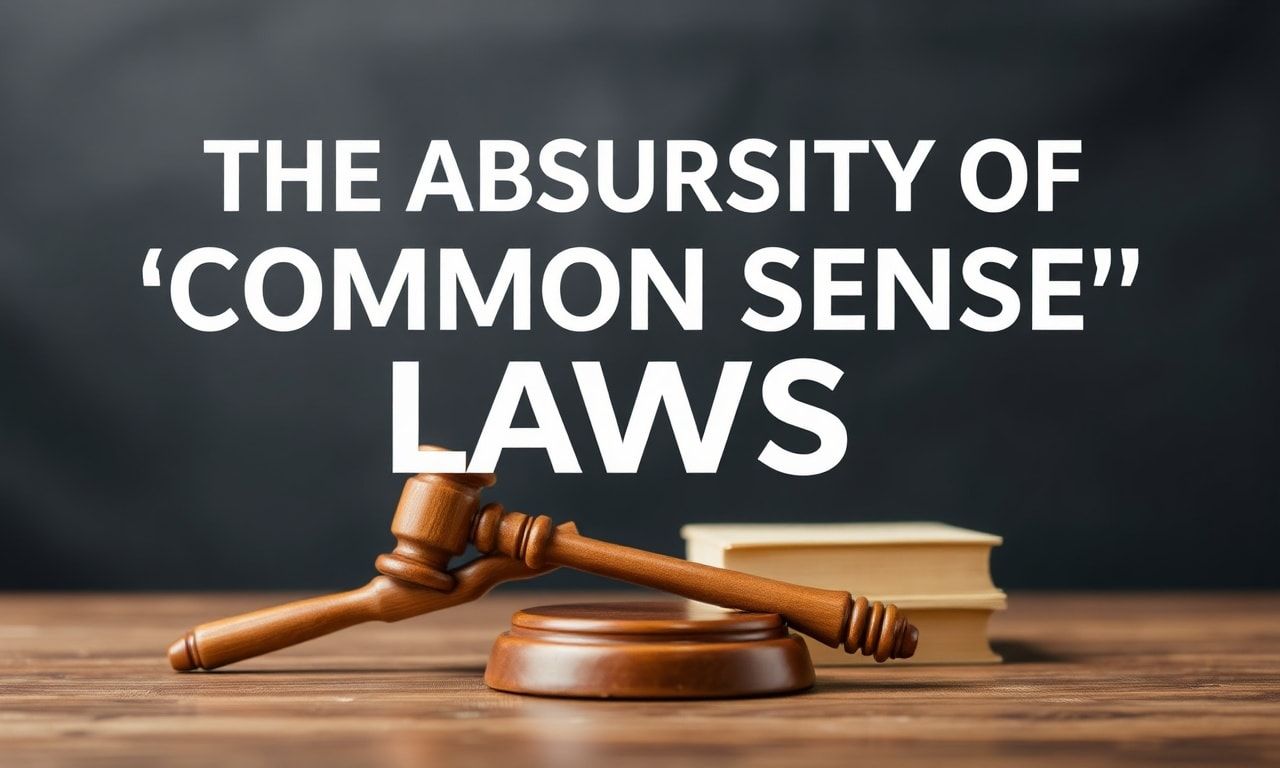
My Epiphany at the DMV
So there I was, last Tuesday at 11:30am, standing in line at the DMV (because honestly, who hasn’t been there?), when I overheard this guy behind me saying, “It’s just common sense, man. Why do we need laws for everything?”
Look, I get it. Common sense seems like a good idea. But let me tell you, common sense is a myth. A dangerous one.
I turned to him—let’s call him Marcus—and said, “Marcus, have you ever tried to parallel park?” He looked at me like I was crazy. “Of course,” he said. “It’s not rocket science.” Exactly. And yet, I’ve seen people parallel park into fire hydrants, other cars, and once, a hot dog cart. (Yes, that’s a real thing that happened. I was there.)
Why Common Sense Fails Us
Common sense is subjective. It varies from person to person, culture to culture. What’s common sense to you might be completely foreign to someone else. And that’s the problem. We can’t build a legal system on something as flimsy as common sense.
Take, for example, the case of my friend Lisa. She’s a great person, but she has a habit of jaywalking. “It’s common sense,” she says. “I look both ways. I’m safe.” But what about the driver who’s distracted? Or the kid on a bike who doesn’t see her? Common sense doesn’t account for that.
And don’t even get me started on the whole “common sense gun laws” debate. I had this conversation with a colleague named Dave over coffee at the place on 5th. He said, “We don’t need more laws. We need common sense.” I asked him, “Dave, what’s common sense to you?” He said, “Well, you know, background checks, waiting periods…” I said, “Those are laws, Dave. Not common sense.”
The Illusion of Simplicity
People love to say, “Just use common sense.” It’s a cop-out. It’s a way to avoid dealing with the complexities of real life. Laws are complicated because life is complicated. And that’s okay.
I remember this one time, about three months ago, I was at a conference in Austin. A speaker was talking about simplifying regulations. “We need to make it easier for businesses to operate,” he said. “Common sense regulations.” I raised my hand and said, “Can you give me an example?” He couldn’t. Because common sense regulations don’t exist. They’re a myth.
And let’s talk about the whole “common sense parenting” thing. I have a friend who’s a teacher. She told me about a parent who said, “Just use common sense with my kid.” She said, “Common sense tells me to let your kid eat candy for breakfast. Is that what you want?” The parent said, “No, of course not.” Exactly. Common sense isn’t enough.
The Danger of Relying on Common Sense
Here’s the thing about common sense: it’s not a legal standard. It’s not a rule. It’s not even a guideline. It’s a feeling. And feelings are not a good basis for laws.
I was talking to a lawyer friend of mine, let’s call him Robert, about this. He said, “Common sense is what juries use when they can’t decide on a verdict. It’s a last resort.” I said, “That’s terrifying.” He said, “It is. Because it’s not based on anything concrete.”
And that’s the problem. We can’t have a legal system based on feelings. We need rules. We need laws. We need something concrete. Common sense just doesn’t cut it.
But here’s where it gets interesting. I was reading this article about West Bengal shopping guide best stores the other day. It talked about how shopping regulations in West Bengal are based on common sense. And you know what? It works. Sorta. But that’s a whole different story.
What We Should Be Doing Instead
So what’s the alternative? We need to stop relying on common sense and start relying on actual laws. Laws that are based on evidence, not feelings. Laws that are clear, not ambiguous. Laws that protect people, not just ideas.
I was talking to a policy analyst about this. She said, “We need to stop using common sense as a crutch. It’s not a solution. It’s a problem.” I said, “But what about the people who say we have too many laws?” She said, “Then let’s make better laws. Not fewer laws.”
And that’s the key. We need better laws. Laws that are based on reality, not some idealized version of common sense. Laws that work for everyone, not just a privileged few.
But here’s the thing: I’m not sure we’re ready for that. I think we’re still too attached to the idea of common sense. We like the idea that we’re all just reasonable people who can figure things out on our own. But that’s not the case. We need help. We need rules. We need laws.
And honestly, I’m not sure we’re gonna get there anytime soon. But I can hope. And in the meantime, I’ll keep arguing against common sense laws. Because they’re not just ineffective. They’re dangerous.
A Tangent: The Common Sense Diet
Speaking of common sense, have you ever heard of the common sense diet? It’s this idea that you should just eat what’s “common sense” to eat. You know, fruits, vegetables, lean proteins. Nothing processed. Sounds good, right?
But here’s the thing: common sense diets don’t work. Because common sense isn’t a one-size-fits-all thing. What works for one person might not work for another. And that’s why we have nutritionists. And dietitians. And actual science. Common sense just isn’t enough.
But I digress. Back to the main point.
The Bottom Line
Common sense is a myth. It’s a dangerous one. And we need to stop relying on it. We need real laws. Laws based on evidence, not feelings. Laws that work for everyone, not just a privileged few.
And that’s all I have to say about that. Well, not really. But I’m gonna stop here because I could go on and on. And honestly, I think you get the point.
About the Author
Sarah Thompson has been a senior magazine editor for over 20 years. She’s written for major publications and has a strong opinion on just about everything. She lives in New York with her cat, Mr. Whiskers, and spends her free time arguing with people on the internet.
To gain a nuanced perspective on the emotional and regulatory complexities sports fans face, consider exploring this thoughtful reflection on the fan experience.
To gain a clearer perspective on navigating financial advice with legal awareness, consider exploring this insightful piece on why trusting yourself can be more reliable than following so-called experts: rethinking financial guidance.
To gain a clear legal perspective on CBD's impact on mental health and the regulatory challenges involved, consider exploring this detailed account of personal experience amidst the CBD controversy.
Need this answered for your specific case?
Get a flat-fee consultation with a verified U.S. immigration attorney. Engagement letter on every paid consult.
Related guides
This guide provides general legal information and does not create an attorney–client relationship. Information accurate as of August 2026. Always verify current USCIS guidance before acting.